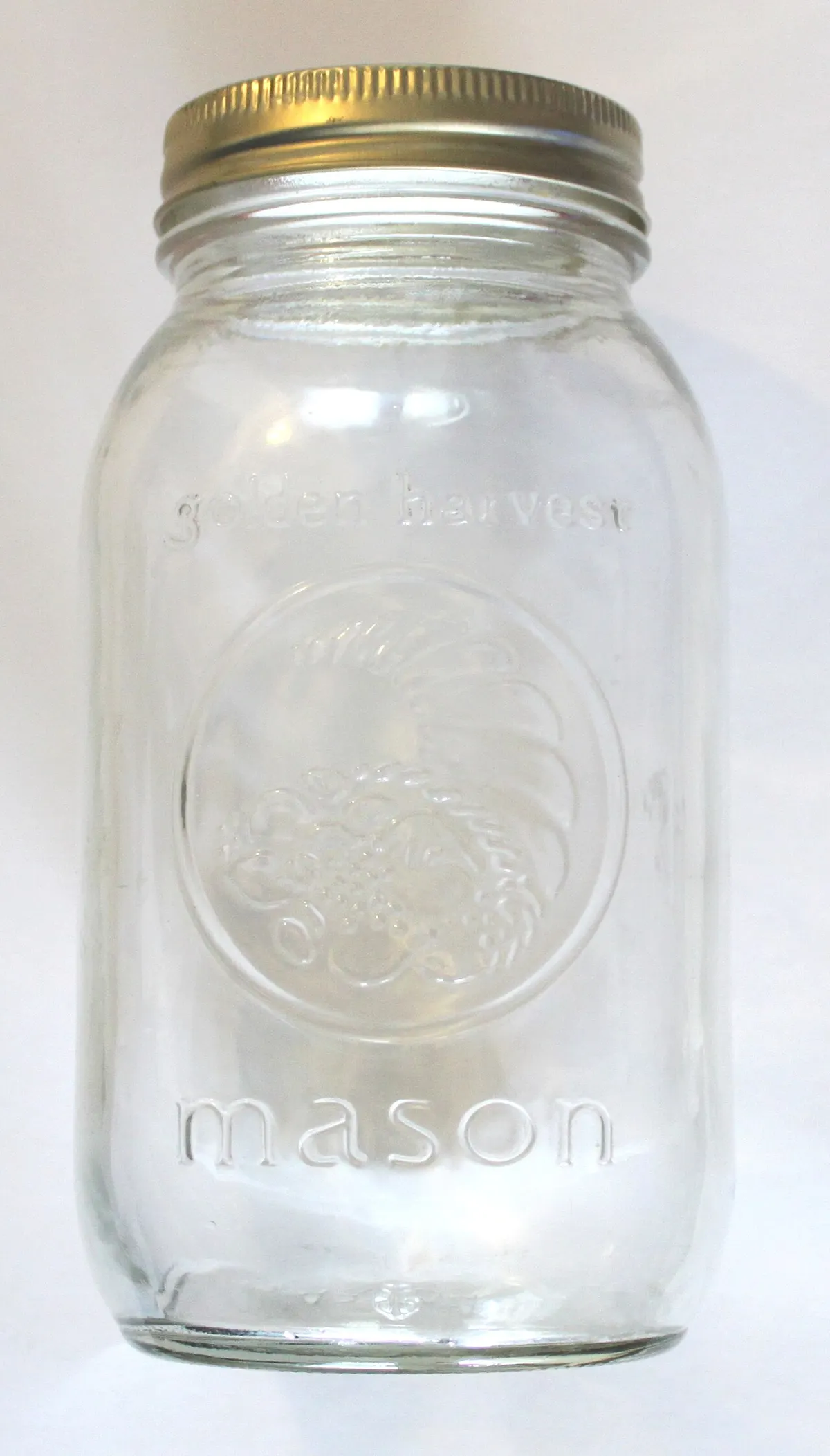
Mason jar sizes for canning come down to four you will actually use: half-pint, pint, pint-and-a-half, and quart. Pick the size your tested recipe lists, then pick regular or wide mouth for convenience. The lid is the part with real rules, and most of them fit in one sentence: new flat lids every time, bands as long as they are not rusty.
This guide covers which jar goes with which recipe, the regular vs wide mouth question, and every lid rule worth knowing. The rules come from the National Center for Home Food Preservation (NCHFP) and extension services at Penn State, North Dakota State, the University of New Hampshire, and the University of Maine. Our product picks are based on manufacturer specifications, those guidelines, and patterns in owner reviews. We have not used or bought any of them.
What mason jar sizes are used for canning?
University of New Hampshire Extension lists the standard home canning sizes as half-pint, pint, 1 1/2 pint, quart, and half-gallon, in regular or wide mouth. Here is what each one is good for.
| Jar size | Volume | Typical use in tested recipes | Notes |
|---|---|---|---|
| Quarter-pint (4 oz) | 4 oz | Jelly samples, gifts | Use the half-pint process when the recipe lists half-pints |
| Half-pint | 8 oz | Jams, jellies, relishes, sauces | Jelly directions usually call for half-pints |
| 12 oz | 12 oz | Jams, jellies | Uses the next larger size’s time |
| Pint | 16 oz | Applesauce, pickles, salsa, most vegetables | The most versatile size |
| Pint and a half | 24 oz | Asparagus, pickle spears | Use quart times |
| Quart | 32 oz | Tomatoes, fruit, juices, vegetables | Fewer jars per batch |
| Half-gallon | 64 oz | Apple juice and grape juice only | Not for anything else |
Two rules make the table work:
- Smaller is allowed, larger is not. Penn State Extension says that for in-between sizes you use the time and pressure for the next larger size. A 12 oz jar gets the pint time; a 24 oz jar gets the quart time.
- You can never scale up. NCHFP is explicit that processing times “cannot be extended by any formula to a larger jar.” If a recipe lists only pints, quarts are off the table.
The half-gallon row surprises people. NCHFP says research-tested processes exist only for apple and grape juice in half-gallons, and that tomato juice is not included. Penn State explains why: the jar is too large for heat to reach the center reliably. Keep half-gallons for dry storage and fermenting.
Regular mouth vs wide mouth: which should you buy?
Mouth width does not change the processing time. Tested recipes set times by jar volume, so a wide mouth pint and a regular mouth pint get the same process. The choice is about filling, emptying, and lid cost.
| Regular mouth | Wide mouth | |
|---|---|---|
| Opening | About 2 3/4 in (70 mm) | About 3 3/8 in (86 mm) |
| Best for | Jams, sauces, juices, applesauce, anything pourable | Whole fruit halves, pickle spears, tomatoes, fermenting |
| Filling | Funnel recommended | Easier to pack by hand |
| Cleaning | Harder to reach the bottom | A hand fits in most sizes |
| Lid cost | About 42 cents per flat lid (live price below) | About 62 cents per flat lid (live price below) |
| Fermentation lids | Fewer options | Most airlocks and weights are sized for wide mouth |
If you plan to make jam and applesauce, regular mouth is cheaper and works fine. If you plan to pack peach halves, whole tomatoes, or dill spears, wide mouth saves a lot of fiddling. Many canners end up with regular mouth half-pints for jam and wide mouth quarts for everything bulky. If you also ferment, wide mouth is the easier pick, since most fermentation lids for mason jars fit wide mouth first.
Pantry pick: Ball Regular Mouth Pint Jars, 8 Count

Eight 16 oz regular mouth jars with lids and bands, about $3.52 per jar at this price. Pints show up in more tested recipes than any other size, from applesauce to salsa, so this is the safest first purchase. The included lids cover one batch; after that you buy flat lids separately.
Pantry pick: Ball Wide Mouth Quart Jars, 8 Count
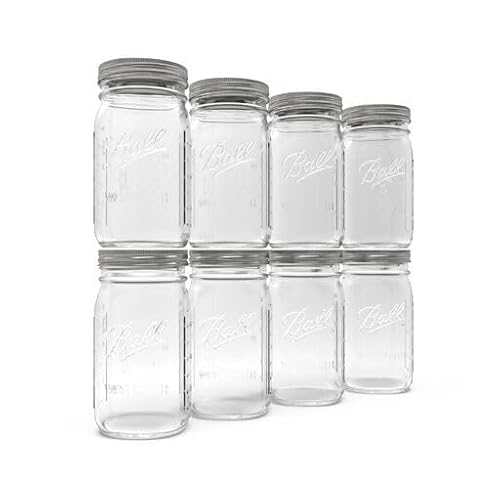
Eight 32 oz wide mouth quarts with lids and bands, about $4.03 per jar. Quarts are the workhorse size for tomatoes and fruit, and the wide opening makes packing halves and spears much easier. Check that your canner fits quarts; most pressure canners hold 7, and a water bath canner needs 1 inch of water over the tops.
Pantry pick: Ball Quilted Crystal Jelly Jars, 8 oz, 12 Count

Twelve 8 oz regular mouth half-pints with lids and bands, about $2.25 per jar. Half-pints are the size most jam and jelly recipes are tested in, and the quilted pattern makes them the usual choice for gifts. They take standard regular mouth lids, so refills are cheap.
Which jars should you not use for canning?
Penn State, NCHFP, and UNH Extension agree on the list:
- Commercial food jars (mayonnaise, pasta sauce, pickles). NCHFP lists them as a cause of breakage, and Penn State says mayonnaise-type jars should not go in a pressure canner.
- Tulip-shaped or decorative jars, and clear craft jars labeled “not for canning.”
- Bail-wire jars with rubber gaskets. UNH and Penn State both say storage or decoration only.
- Antique jars from roughly the 1920s to 1970s. Penn State recommends keeping them for display.
- Any jar with a nick, chip, or hairline crack. A nicked rim will not seal. Run a finger around every rim before filling.
Real canning jars are built to last. Penn State puts their life expectancy at about 10 to 13 years, longer with careful handling.
What kind of lids do you need for canning?
Tested recipes are written for the standard two-piece closure: a flat metal lid with a ring of sealing compound, plus a separate threaded screw band. North Dakota State University Extension says research-tested recipes recommend exactly this setup.
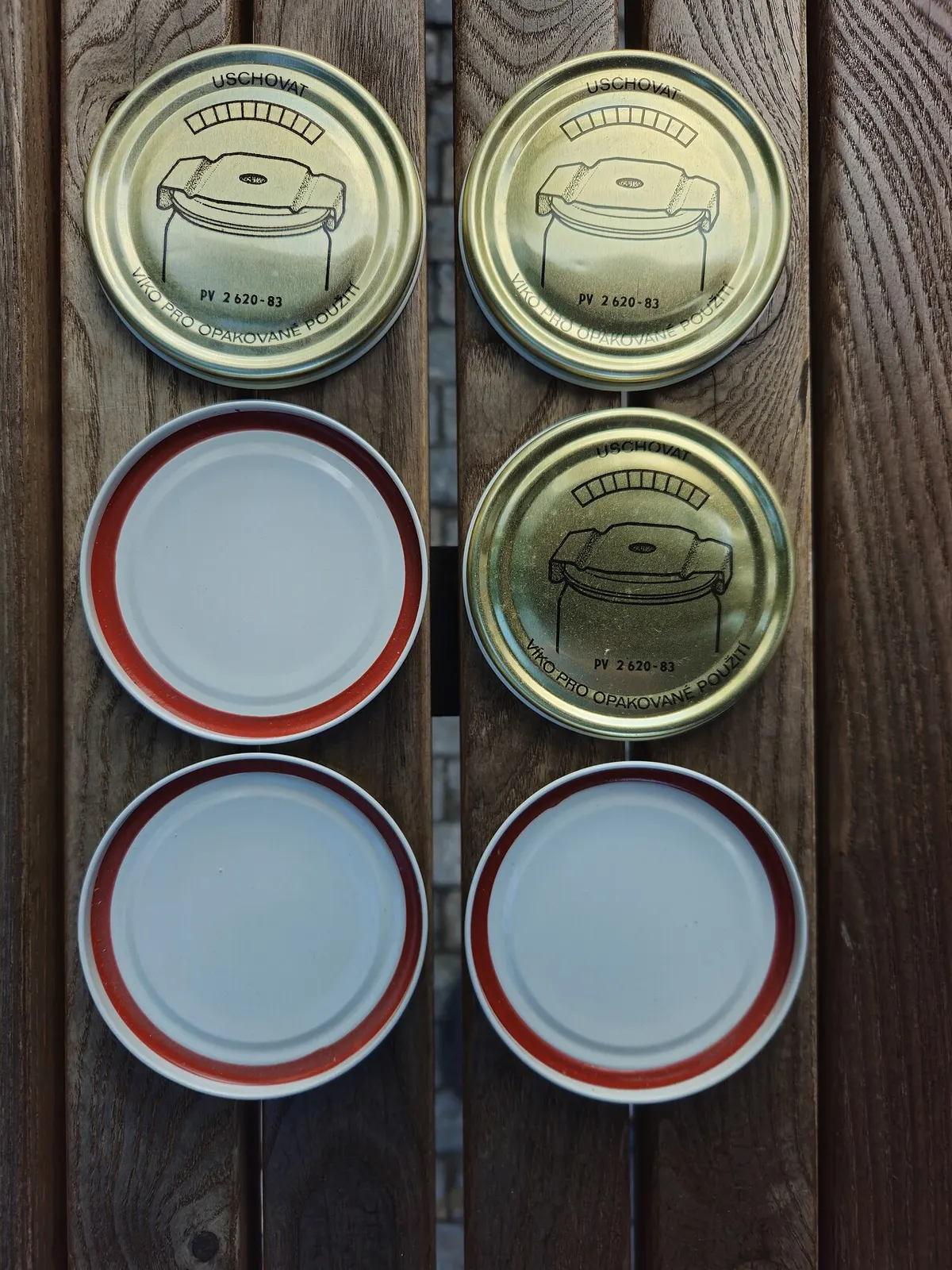 Old European reusable one-piece jar lids. Standard US tested recipes call for two-piece lids instead. Photo: VANOCE2022, CC0, via Wikimedia Commons
Here is how the lid options compare.
| Lid type | Reusable? | Recommended for tested recipes? | Notes |
|---|---|---|---|
| Two-piece metal (flat lid plus band) | Band yes, flat lid no | Yes | The standard |
| Reusable plastic lid with rubber gasket | Lid and gasket yes, if undamaged | Mixed | NDSU and UNH say research suggests they seal safely; NCHFP has not recommended them for lack of research |
| One-piece commercial lug lids | No | No | Penn State says avoid them for home canning |
| Twist-off lids from store jars | No | No | Penn State says never reuse them |
| Glass lid with bail and rubber ring | Yes | No | Storage and decoration only |
Do you need to heat canning lids before using them?
Usually not anymore. University of Maine Extension says Ball stopped recommending preheating lids about 10 years ago, and that preliminary research shows preheating may even be harmful because it can make lids buckle. Wash lids and bands in warm, soapy water instead.
The safer general rule, from NDSU and UNH Extension: follow the directions on your lid box, since sealing compounds change and brands differ. NDSU also advises hand washing rather than the dishwasher, which can encourage rust.
How tight should the bands be?
Fingertip tight. NDSU describes it as fingertip tight plus a quarter turn, and UMaine says to use only your fingertips, not your whole hand. Too loose and liquid escapes during processing; too tight and air cannot vent, so lids buckle or jars break.
After processing, do not retighten the bands. Let jars cool undisturbed for 12 to 24 hours, check the seals, then remove the bands for storage, per NDSU and UNH. A band left on can hide a failed seal.
Can you reuse canning lids and bands?
Bands, yes. Flat lids, no.
NCHFP says lids should not be used a second time because the sealing compound becomes indented and may not form another airtight seal. Penn State adds that lids are often bent when you pry them off. Bands can be reused unless they are badly rusted, bent, or dented. Wash and dry them before storing, and they last for years.
If a jar does not seal, UNH Extension says you can reprocess it within 24 hours with a new lid, refrigerate it and use it within a few days, or freeze it.
Pantry pick: Ball Regular Mouth Lids, 6 Packs of 12

Seventy-two regular mouth flat lids, about 42 cents per lid. That covers nine canner loads of 8 jars. Lids only, no bands, so pair it with jars that already have bands. Buying from the brand's own listing also sidesteps the counterfeit problem described below.
Pantry pick: Ball Wide Mouth Lids, 6 Packs of 12

Seventy-two wide mouth flat lids, about 62 cents per lid, which is the real long-term cost of choosing wide mouth jars. Worth it if you pack a lot of whole fruit, tomatoes, or pickles. If you can only a few batches a year, a smaller pack makes more sense.
How long do canning lids last in storage?
NDSU Extension says unused lids stored in a cool, dry place may be good for up to five years from the date of manufacture. Older extension advice, repeated by Oregon State, is to buy only what you will use within a year. The practical answer: buy about a season’s worth, store them dry, and do not use any lid that is dented, rusted, or has gaps in the compound.
Sealed jars themselves should stay sealed for years when processed correctly, but NDSU recommends eating home-canned food within the first year for best quality.
Do canning jars need to be sterilized?
Only for short processes. NCHFP says jars do not need sterilizing if they will be processed for 10 minutes or more in a boiling water canner, or in a pressure canner. For anything processed under 10 minutes, sterilize the jars by boiling them for 10 minutes first. UNH adds 1 minute per 1,000 feet of elevation. Either way, jars should be clean and hot when filled, since hot food in a cold jar can crack it.
Before buying a canner to go with your jars, see our canning supplies checklist and the guide to water bath vs pressure canning, which explains which foods need which.
Common questions about mason jars and lids
Are Ball and Kerr jars interchangeable?
Both brands use the same regular and wide mouth standards, so their lids and bands fit each other’s jars of the same mouth size. What matters for safety is that the jar is made for home canning and the lid is new.
Can I use a pint jar if the recipe says quarts?
Yes, using the quart processing time, unless the recipe gives a separate pint time. Going the other direction, from pints to quarts, is not allowed without a tested quart process.
Can I can in half-gallon jars?
Only apple juice and grape juice, per NCHFP. Everything else needs a smaller jar.
The short version
- The main mason jar sizes for canning are half-pint (8 oz), pint (16 oz), pint and a half (24 oz), and quart (32 oz).
- Use the jar size your tested recipe lists. Smaller jars take the next larger size’s time; larger jars are never allowed.
- Half-gallon jars have tested processes only for apple and grape juice.
- Regular mouth openings are about 2 3/4 inches (70 mm); wide mouth openings are about 3 3/8 inches (86 mm). Mouth width does not change processing time.
- Flat lids are single use. Bands are reusable unless rusted, bent, or dented.
- Most current lids do not need preheating. Wash them in warm, soapy water and follow the box directions.
- Tighten bands fingertip tight, never retighten after processing, and remove bands once jars have cooled 12 to 24 hours.
- Unused lids may last up to five years stored cool and dry, per NDSU.
Keep reading
If you are just getting started, our beginner’s roadmap to preserving food at home shows where canning fits. The water bath vs pressure canning guide covers which foods need which method, and the tested applesauce method is a good first batch for your new pints.
Primary sources: NCHFP’s general canning FAQs, Penn State Extension’s Canning Jars and Lids: An Update, NDSU Extension’s Put a Lid on It!, UNH Extension’s Successful Home Canning Starts with Jars and Lids, and University of Maine Extension’s No Need to Preheat Canning Jar Lids.